Setting the Stage Part IV: What does staging a home actually involve?
Showcase your home in its best light for a smooth, swift, and successful sale.
Looking for guidance, support, coaching? Connect with WhiteSpace Design Co. for a plan, a partner, or both!
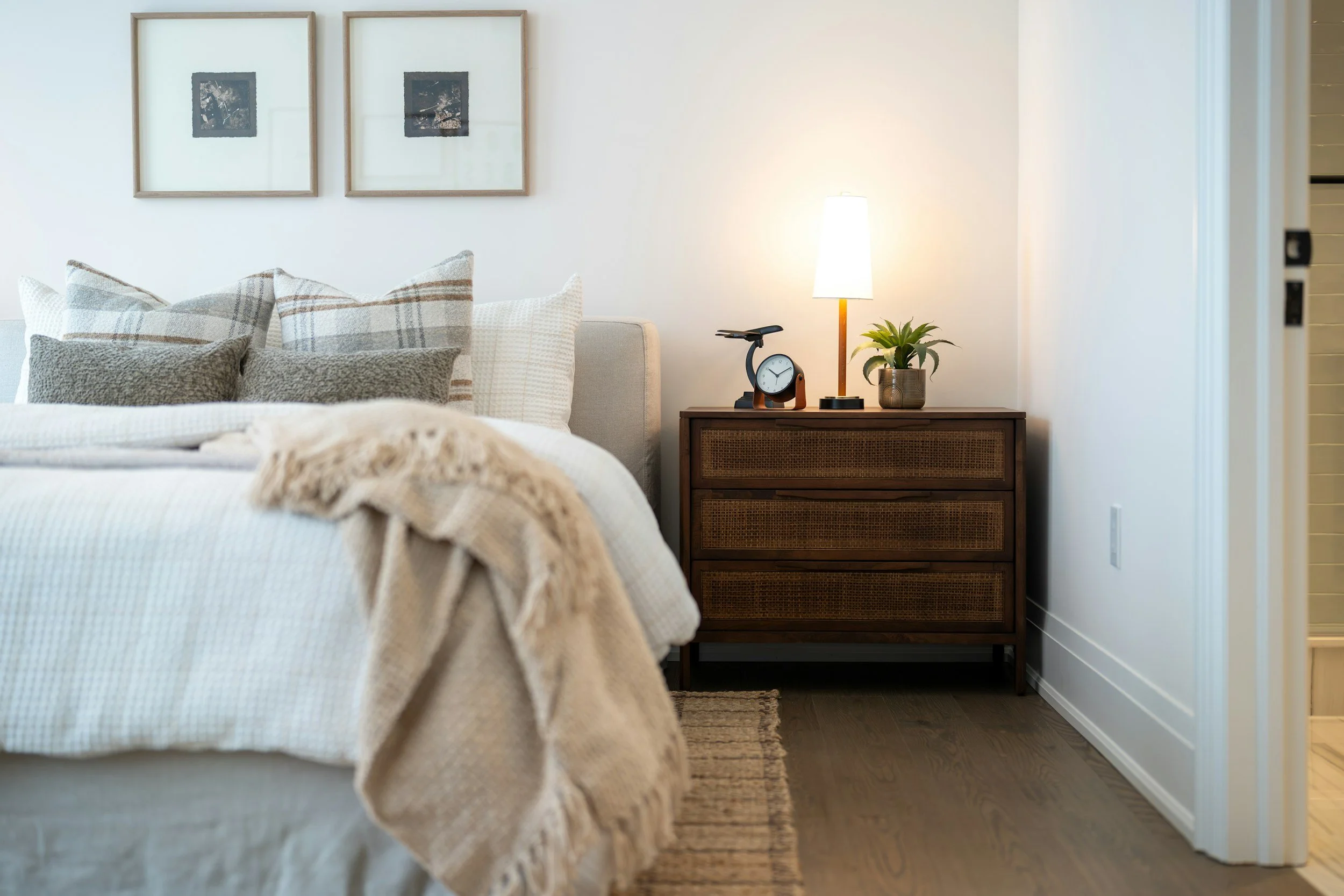
What Does Staging a Home Actually Involve?
Preparing Your Home for Photography, Showings, and a Successful Sale
You've spent months—decluttering, editing your belongings, organizing closets, making repairs, and refreshing your home in preparation for selling.
Now comes the finishing layer: staging.
But what does staging actually involve? Does it mean removing all your furniture and renting new pieces? Do you need to purchase new décor? And how do you maintain a beautifully staged home when you're still living in it?
The answer depends on your home, your budget, your timeline, and how the property will be presented to potential buyers.
Let's explore the different approaches to staging and how thoughtful preparation can help your home make a memorable first impression.
Staging Isn't Just Decorating
One of the biggest misconceptions about home staging is that it's simply decorating a house to make it look pretty.
While aesthetics certainly matter, staging serves a different purpose than decorating a home for the people who live there.
Interior decorating reflects the personalities, preferences, and lifestyles of the homeowners. Home staging helps potential buyers imagine their own lives in the space.
The goal is to highlight the home's best features, communicate how rooms can function, establish a sense of scale, and create a welcoming environment that appeals to a broad range of buyers.
Sometimes that means adding something. More often, it means removing, simplifying, or rearranging what's already there.
A well-staged home should feel spacious, intentional, comfortable, and inviting—not necessarily like a furniture showroom.
Staging With Your Existing Furnishings
One of my favorite approaches to staging is working with the furniture and accessories homeowners already own.
Why? Because sometimes the most impactful transformations don't require purchasing anything new.
Instead, we look at each room with fresh eyes and consider:
Is the furniture appropriately scaled for the space?
Does the arrangement create comfortable pathways and good circulation?
Is the purpose of each room immediately clear?
Are there too many pieces competing for attention?
Could furniture or accessories from another room work better here?
Are personal collections or decorative items distracting from the home's architectural features?
For example, removing an oversized chair might make a living room feel significantly larger. Relocating a bookshelf could improve the flow between rooms. Simplifying artwork and accessories might allow beautiful windows, architectural details, or natural light to become the focal point.
Staging involves depersonalizing the space so new potential homeowners can envision this space being their next home. I strongly encourage clients to store anything that is personal, sentimental, expensive, or controversial during photoshoots, open houses, and walkthroughs.
The goal isn't to showcase everything you own. It's to showcase the home itself.
This approach is often especially practical for homeowners who will continue living in the property while it's listed.
When Does Renting or Purchasing Furnishings Make Sense?
Sometimes existing furnishings aren't enough to communicate a room's potential.
Perhaps the furniture is too large, a room is empty, or the pieces don't complement the home's architecture or target market.
In those situations, it may make sense to supplement the existing furnishings with carefully selected items.
That could include artwork, area rugs, lighting, bedding, pillows, occasional furniture, or other accessories that help create a cohesive presentation while keeping the style neutral and the feel/ambience warm and cozy.
There are generally two approaches.
Purchasing furnishings: This may make sense when the homeowner can use the items in their next home, or when a few targeted purchases are more practical than renting. In some instances, the potential buyer may be interested in purchasing the furnishings if offered the opportunity.
Renting furnishings: Professional staging companies can provide furniture and accessories for a designated period, typically with costs associated with delivery, installation, rental duration, and eventual removal.
Neither approach is automatically better.
The right strategy depends on the property's needs, the anticipated time on the market, and the overall staging budget.
Before making significant investments, I recommend working with your real estate agent to understand what level of staging is appropriate for your local market and price point.
Staging an Occupied Home vs. a Vacant Home
This is an important distinction because these two situations require very different strategies.
When You're Still Living in the Home
If you're living in the property while it's on the market, staging needs to balance two competing priorities:
Presenting the home beautifully while allowing you to continue living comfortably.
You still need to cook, get dressed, manage laundry, care for pets, and go about your daily routines.
That's why I believe organizing and staging should work together.
Instead of simply hiding everyday belongings before each showing, we can create manageable systems that make it easy to transition between daily life and showing-ready.
For example, designated storage for toiletries can keep bathroom counters clear. Simplifying the number of kitchen appliances on the countertop makes daily cleanup easier. Creating a temporary home for mail, paperwork, toys, and pet supplies allows these items to be put away quickly.
A beautifully staged home is only successful if the people living there can realistically maintain it.
When the Home Is Vacant
Vacant properties present a different challenge.
Without furniture, buyers may have difficulty understanding the scale of a room or imagining how it could function.
An empty bedroom may appear smaller than expected. An open-concept living area may lack definition. An awkward bonus room may leave buyers wondering how they would use it.
Strategically placed furnishings can help communicate those possibilities.
And here's something worth remembering:
Not every room needs to be fully furnished.
Depending on the property and budget, it may make sense to prioritize the main living areas, dining room, primary bedroom, and other spaces where furnishings will help buyers understand the home's layout and potential.
The objective is to create clarity, not necessarily fill every room.
Staging for Photography vs. Staging for Showings
Another important consideration is that preparing a home for professional photography isn't quite the same as maintaining it for in-person showings.
Photography Day: Every Detail Matters
For many buyers, listing photographs are their first introduction to your home.
Professional photography captures the overall impression of each space, but it can also highlight visual distractions that we might overlook in everyday life.
Before the photographer arrives, attention should be given to furniture placement, lighting, bedding, window treatments, and the styling of surfaces.
This might include removing small appliances, steaming and straightening linens, opening blinds/shades/drapes, adjusting pillows, hiding cords, reducing shadows, editing accessories, and adding greenery to ensure the rooms feel balanced and cohesive.
Sometimes an arrangement that feels comfortable in person needs a slight adjustment to photograph well.
The goal is to make sure the photographs accurately represent the home while presenting it at its best.
Showings and Open Houses: The Experience Matters
Once the home is listed, the focus shifts from creating beautiful photographs to maintaining a welcoming experience for potential buyers.
Now, buyers are physically walking through the rooms, opening closets, noticing storage, and experiencing how the spaces connect.
Cleanliness, comfortable circulation, natural light, and accessible storage become especially important.
This is where a simple 15–30 minute pre-showing reset routine can be helpful, depending on the size of the home and household.
Rather than rushing around trying to hide belongings, homeowners can follow a predictable routine: clear surfaces, put away everyday items, make beds, manage laundry, tidy entryways, and complete a final walkthrough. The home should smell clean, fresh, and neutral - no need to light scented candles, spray Febreeze, or bake fresh cookies - this can have the reverse impact from the intent. Keep things simple and transparent. During the walkthrough remember to open all window treatments, turn on all the lights, and if you have a gas or electric fireplace, you could turn it on if that feels appropriate for the season.
A good staging plan considers not only how the home looks on photography day, but how it will be maintained throughout the selling process.
How Much Time and Money Should You Budget for Staging?
As with decluttering and home maintenance, staging requires both a financial investment and a time investment.
A consultation using existing furnishings may require relatively little additional spending, while a vacant home requiring furniture rental, delivery, installation, and removal can involve a much larger budget.
There may also be expenses for cleaning, minor repairs, accessories, moving furniture, and storing items that have been removed.
And don't forget the lead time.
Professional stagers may need time to develop a plan, source furnishings, coordinate deliveries, and schedule installation. Even when using existing furniture, homeowners may need several days or weeks to complete the recommended changes around their regular responsibilities.
Staging should be planned well before photography is scheduled—not squeezed into the final 48 hours.
The Value of a Fresh Perspective
One of the greatest benefits of working with a professional organizer and/or designer is having someone look at your home without the emotional attachment that naturally develops over years of living there.
Homeowners see their favorite chair, the family photographs, the dining table where holidays were celebrated, and the rooms that have evolved with their family's needs.
A potential buyer sees something different.
They are evaluating space, flow, condition, functionality, and how the home might support their own lifestyle.
A fresh, objective perspective can help bridge that gap.
At WhiteSpace Design Co., I approach staging through the lens of both organization and design—considering how spaces function, how people move through them, what draws the eye, and how intentional editing can improve the overall experience.
It's not always about adding more.
Sometimes, creating a more compelling space is simply about knowing what to take away.
Setting the Stage for What's Next
Throughout this Setting the Stage series, we've explored the many layers involved in preparing a home for sale.
We've talked about why it's important to start earlier than you think, how long decluttering can realistically take, the repairs and maintenance that often become visible once belongings are edited, and now the finishing touches that help a home shine.
Each phase builds on the one before it.
Clarify. Declutter. Edit. Repair. Refresh. Stage.
And while these steps can help prepare your property for the market, they offer something else, too.
They give you an opportunity to reconsider how your home functions, what belongings truly matter, and how you want to live moving forward.
Maybe you're preparing for a move across the country. Maybe you're downsizing after decades in the same house. Or maybe you're simply wondering whether your current home could better support your next chapter.
Whatever comes next, the process of thoughtfully editing and improving your home is an investment in how you live.
And sometimes, after all that work, you may discover you don't want to move at all.
Maybe the house wasn't the problem. Maybe it just needed some WhiteSpace.
At WhiteSpace Design Co., I help homeowners prepare for life's transitions through organizing, space planning, editing, staging, and styling. Whether you're preparing to list your home or simply want to fall back in love with the space you already have, we can create a thoughtful plan that fits your goals, timeline, and budget.
It's never too soon to create space for what matters.
Ready to get started? Contact WhiteSpace Design Co. to schedule a consultation and explore how we can help prepare your home for what's next.
Thinking about selling—or simply ready for less stuff and more space? Contact WhiteSpace Design Co. to create a decluttering plan that works for your home and your timeline.
You can learn more or book a complimentary connection call at:
👉 www.whitespacedesignco.com